




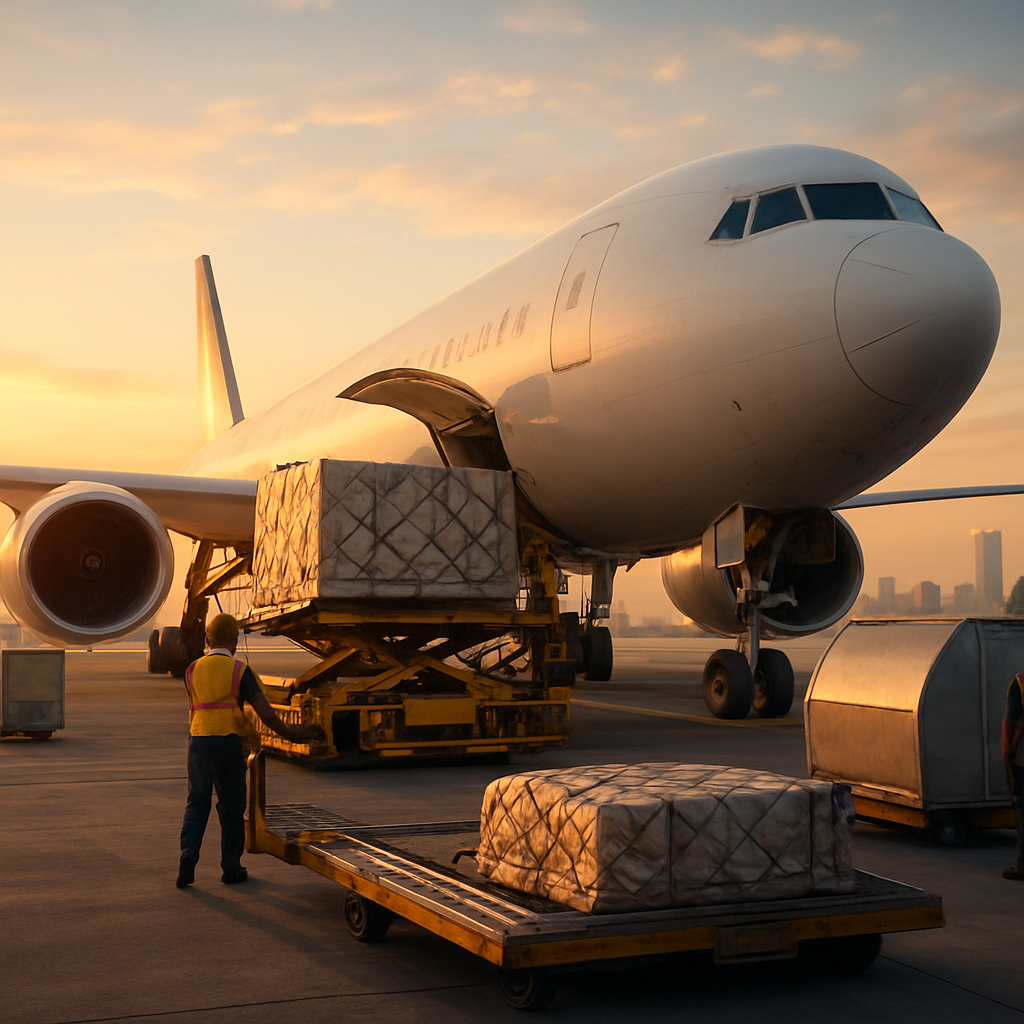
Express Air Freight Delivery: Meeting Urgent Needs in 2026
Express air freight delivery is rapidly shifting from a niche service to a strategic lever for supply chain resilience in 2026. As global cargo demand and yields remain well above pre‑pandemic levels, logistics leaders are reassessing where speed, reliability, and visibility can genuinely protect revenue. When used with discipline, express air freight delivery becomes less about reacting to crises and more about designing a risk‑balanced network that can absorb shocks without eroding customer trust.
In 2026, competitive advantage in logistics will come from how precisely you deploy air capacity, not how frequently you use it.
Europe’s evolving hub network illustrates this shift. Air freight in Netherlands, anchored by Schiphol and supported by secondary gateways such as Maastricht Aachen, is enabling tighter cut‑off times and more resilient routing for urgent healthcare, high‑tech, and perishables flows. For shippers, this creates new opportunities in urgent shipment logistics, particularly when ocean services are disrupted by geopolitical tensions, weather events, or port congestion.
Why express air freight delivery matters now
Express air freight delivery is increasingly central to boardroom discussions because it directly links service performance and working capital. Time-sensitive air cargo solutions allow companies to hold leaner inventories without compromising fulfilment promises, especially for high‑margin or configuration‑heavy SKUs. The trade‑off is cost, which means understanding air freight pricing factors and embedding them into product, channel, and service design decisions rather than treating them as a last‑minute premium.
Designing a disciplined express air strategy
Leading organisations are segmenting demand instead of defaulting everything to air in a disruption. Predictable flows with longer horizons are shifted to ocean or rail, while express time-critical air freight is reserved for revenue‑critical orders, service recovery, and strategic customers. This requires urgent air freight planning that connects sales forecasts, inventory policies, and production schedules, supported by data‑driven tools for air cargo cost calculation and air freight rate comparison across lanes and service levels.
Network design is also changing. Shippers are building playbooks for logistics for last-minute cargo, including predefined routings, carrier preferences, and escalation paths for emergency international air shipping. By codifying when to trigger same-day air freight options or priority export air cargo, companies move from ad‑hoc firefighting to repeatable, measurable responses. Publicly available resources such as IATA’s air cargo statistics provide useful benchmarks to validate internal assumptions and plans, while more specialised market updates help refine lane‑level strategies.
In 2026, the most successful logistics teams will treat express air capacity as a portfolio asset, not a sunk cost. Review your current network, identify the SKUs, customers, and events where delays genuinely damage revenue or loyalty, and align service tiers accordingly. Then partner with your freight specialists to turn those insights into practical playbooks, performance KPIs, and scenario tests. To move from reactive expedites to a structured, value‑driven model, start by benchmarking your express air strategy and engaging with experts who can stress‑test your assumptions and redesign your approach for the next disruption cycle.

Related posts
Sea Freight vs. Air Freight: Choosing the Right Mode for Your Cargo
In the world of logistics and international trade, one crucial decision can sign
Up in the Clouds: The Future of Air Freight Technology
The sky is not the limit; it’s the future. In the world of logistics and a
Airlines Report Cargo Operations ‘Severely Affected’ by Outage
Delays and backlogs are expected across the air cargo industry, following the Mi
