




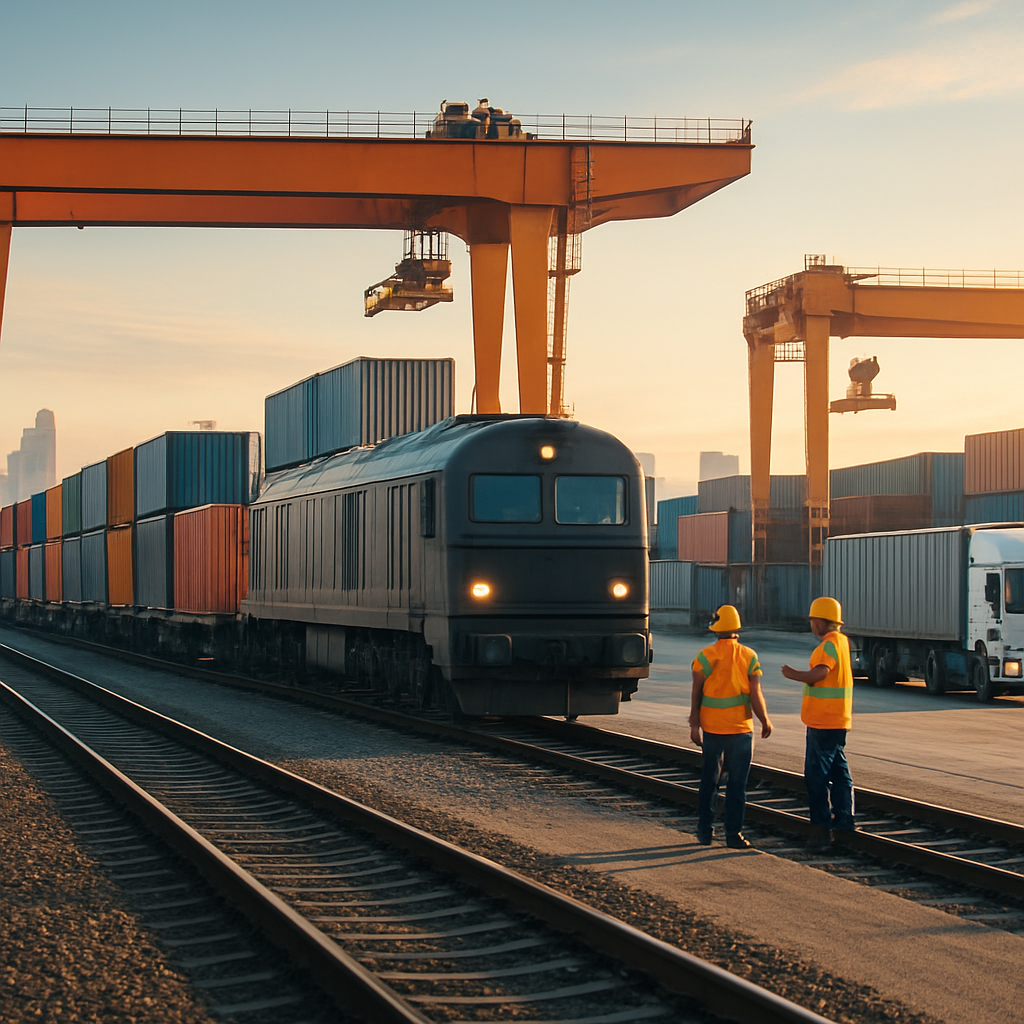
Rail Freight from the Netherlands to China: A Comprehensive Overview
Rail Freight in Netherlands has rapidly become a preferred option for shippers seeking a faster, more predictable route to China without paying airfreight premiums. As trade lanes face disruption and volatility, decision-makers are reassessing how rail can stabilise costs, compress lead times, and protect service levels on critical Asia–Europe flows.
5 Reasons Rail Freight from the Netherlands to China Deserves a Place in Your Strategy
For logistics and supply chain leaders under pressure to reduce risk and improve speed, Netherlands–China rail offers a pragmatic middle path between sea and air. Below are five concrete reasons it should be on your shortlist.
1. Competitive Transit Times Without Airfreight Costs
Express services linking Dutch hubs such as Tilburg and Rotterdam with Xi’an, Chengdu, and Harbin can cut transit to around 15–20 days terminal-to-terminal. That’s often several weeks faster than ocean routes routed around current chokepoints, yet at a fraction of air rates. For mid-value goods, rail freight transportation solutions let you accelerate order cycles while still protecting margin.
2. More Predictable Schedules for Planning and Inventory
Rail routes between Europe and China have matured into reliable corridors with stable departures, fixed timetables, and structured handovers at key borders. This predictability helps planners lock in more accurate lead times, tighten safety stocks, and support just-in-time production. When integrated into a rail-focused logistics and supply chain strategy, rail services reduce the firefighting that comes with port congestion and blank sailings.
3. Strategic Hubs and Intermodal Flexibility
Dutch inland terminals such as Tilburg act as consolidation gateways for Netherlands–China intermodal logistics, connecting barge, truck, and rail on a single platform. From there, containers move overland through Poland and Central Asia before dispersing across Chinese domestic rail networks. This supports intermodal rail and trucking services that can reach inland manufacturing regions as efficiently as coastal ports.
4. Balanced Cost–Speed Profile for Mid-Value Cargo
For electronics, machinery, fashion, and automotive components, the cost–benefit equation often favours rail over both sea and air. Rail Freight in Netherlands helps shippers reduce working capital tied up in inventory, while staying within realistic transport budgets. Combined with end-to-end rail freight solutions, this balance is particularly attractive for businesses scaling e-commerce, aftermarket parts, or seasonal ranges.
5. Reduced Risk Through Expert Cross-Border Management
Long-haul Eurasian rail involves multiple customs zones, varying documentation rules, and route-specific security considerations. Specialist providers offer cross-border rail freight solutions that handle declarations, monitoring, and exception management on your behalf. By using rail-integrated supply chain logistics, you gain visibility from origin terminal to final Chinese destination and can respond quickly to any disruption.
- Coordinate intermodal shipping services by rail to align with production and sales peaks.
- Benchmark total landed cost versus air and sea across at least one full quarter.
- Pilot a limited number of lanes to validate service levels and dwell times.
- Use independent sources such as the International Union of Railways at https://uic.org to track policy and corridor developments.
- Engage partners who can bundle freight transportation solutions, customs, and tracking into one accountable service.
If you are exploring intermodal shipping services for time-sensitive, non-perishable cargo, now is the moment to evaluate how rail can de-risk your network. Book a consultation with a specialist team to review your current lanes, compare options, and design a tailored rail-first roadmap for China–Europe flows.

Related posts
Cross-Border Rail Freight in Europe: Trends and Insights for 2026
Explore cross-border rail freight in Europe for 2026, key trends, provider diffe
Rail Freight Safety: Mitigating Risks in Railroad Transportation
In the world of transportation and logistics, rail freight plays a pivotal role.
Impact of E-Commerce Growth on Logistics Companies
The impact of e-commerce growth on Logistics companies in recent years has been
