





4PL vs 3PL Dutch Warehousing: Strategic Control in a Volatile Global Market
If your products move through the Netherlands, you are already operating inside one of Europe’s most important logistics crossroads. The real question is how much control you want when demand spikes, carriers change routes, or costs swing unexpectedly. That is where 4PL vs 3PL becomes a strategy decision, not just a vendor choice.
3PL vs 4PL basics for Dutch warehousing
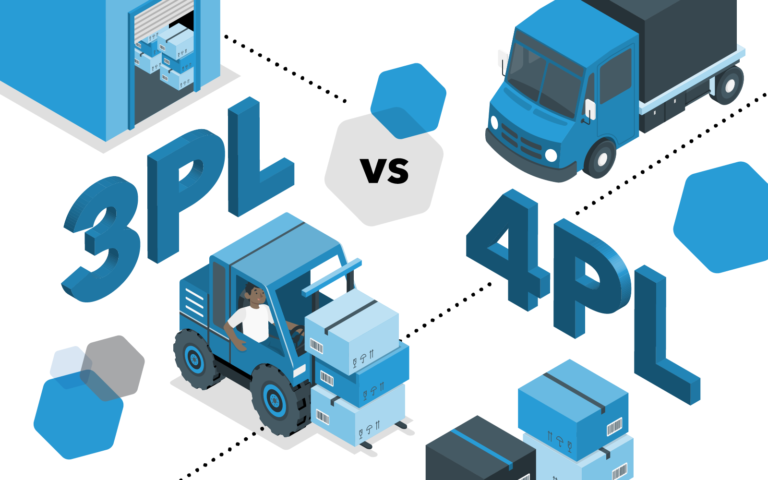
A 3PL (third-party logistics provider) typically runs execution: warehousing, pick-pack, fulfillment, and sometimes transport coordination. In the Netherlands, that often looks like a provider operating warehouses near major nodes like Rotterdam, or inland hubs that support EU distribution.
A 4PL is commonly described as a Lead Logistics Provider (LLP). Instead of only executing tasks, it coordinates the broader supply chain, including the management of multiple 3PLs, systems, and performance.
Bottom line: 3PL helps you do logistics. 4PL helps you run logistics as a controlled system, with governance and optimization across partners.
Why Dutch warehousing is a “control” problem, not just a storage problem
The Netherlands is built for flow. The Port of Rotterdam reported 435.8 million tonnes of throughput in 2024, and noted growth in containers even while some other segments declined. That scale attracts volume, but it also amplifies ripple effects when schedules shift.
On the air side, Schiphol cargo reported about 1.49 million tonnes in 2024, up 8.2%, with commentary tied to e-commerce demand and global disruptions.
So if you serve Dutch and EU customers, you are not only choosing warehousing space. You are choosing how you will manage volatility across ports, air cargo, and inland distribution. A 3PL can be perfect for clean execution. A 4PL can be decisive when you need orchestration across multiple moving parts.
What a 3PL looks like in Dutch warehousing services
A typical 3PL relationship in the Netherlands includes receiving, storage, inventory handling, order fulfillment, returns, and value-added services like labeling or kitting. Providers also highlight strategic locations such as Tilburg, Eindhoven, and other inland hubs for EU reach.
If you are an e-commerce brand, you will see “Netherlands fulfillment” offerings positioned around fast shipping coverage, standardized warehouse processes, and integration with a fulfillment network.
A practical example is how providers market proximity to Rotterdam and major consumer catchments, because it supports shorter lead times and better transport options.
Best-fit signal: you already know your lanes, you want a reliable operator, and your biggest win comes from consistent warehouse execution rather than network redesign.
What a 4PL looks like in Dutch warehousing logistics
A 4PL (often called an LLP) is positioned as a single point of coordination that manages supply chain activities end-to-end, including supervising warehouses and coordinating other partners.
In practice, this means the 4PL sets up governance and performance management, selects and manages 3PLs and carriers, standardizes reporting, and aligns planning across nodes. Many explainers highlight that a 4PL can “manage the relationship with the 3PL,” adding separation and centralized control.
When companies describe why they adopt 4PL services, they often point to optimization and collaboration at scale, especially for larger or more complex networks.
Best-fit signal: you need multi-partner coordination, rapid rerouting options, and unified visibility across warehousing and transport.
Strategic control: the real difference between 4PL vs 3PL
If your supply chain is stable, a strong 3PL can outperform a 4PL simply by executing well. But in a volatile market, “control” becomes measurable:
- Decision latency: how fast you can change carriers, routes, cutoffs, or inventory allocation
- Visibility: whether you can see inventory and orders across nodes without spreadsheet stitching
- Governance: whether someone is accountable for cross-partner performance, not just one warehouse
This is why many summarize it as execution (3PL) vs end-to-end oversight (4PL).
For Dutch warehousing logistics, the control issue shows up when you ship through both Rotterdam and Schiphol lanes, or when you use multiple warehouses for EU coverage. That is where a 4PL control layer can reduce chaos and protect service levels.
Cost and pricing: where companies misread the trade-off
A common misconception is that 4PL is “more expensive” by default. The better way to evaluate is: what costs are you already paying for fragmentation?
With a 3PL, you typically pay storage, handling, and fulfillment-related fees, then separately manage transport and other vendors. With a 4PL, part of the value is consolidating management, standardizing reporting, and optimizing the mix of 3PLs and carriers.
If you are growing fast, the hidden cost is often internal: time spent coordinating exceptions, rework from inconsistent SLAs, and delayed decisions when disruptions hit. The 4PL model is frequently described as suitable when complexity increases and optimization matters more.
Technology and visibility: WMS is not the same as control
Many 3PLs provide a WMS view of inventory in their building, and that can be enough. The problem starts when you have multiple warehouses, multiple carriers, and multiple storefronts. A 4PL is commonly positioned around integrating systems and unifying performance data across the network.
For Netherlands operations, tech matters because volumes can shift between port-fed inventory and air-fed replenishment. Schiphol cargo growth was linked to e-commerce and wider market restrictions, which is exactly the kind of environment where you want stronger cross-node visibility.
A practical target state is a “single source of truth” across WMS, TMS, and OMS feeds, plus shared KPIs. If you want that without building it internally, 4PL vs 3PL becomes a technology decision as much as a logistics one.
Netherlands network design: Rotterdam, inland hubs, and fast EU reach
Dutch warehousing strategies often revolve around a port node plus inland distribution capacity. The Port of Rotterdam even promotes tools to help shippers locate warehousing options in the port area, reinforcing that warehousing is a core part of the node.
On the 3PL side, providers commonly highlight multiple warehouse locations across the Netherlands, including inland logistics regions. Network-style fulfillment offerings also emphasize Benelux positioning and the ability to scale across nearby markets.
This is where a simple rule helps:
- If you operate one Dutch warehouse that feeds your EU orders, 3PL is often enough.
- If you operate multiple nodes, or you frequently shift volumes between nodes, a 4PL control layer can prevent “multi-vendor drift.”
E-commerce pressure: delivery expectations push you toward smarter orchestration
Dutch last-mile expectations keep tightening, especially in dense urban areas where faster delivery options are becoming common. If you sell online, small disruptions cascade into customer experience: wrong inventory placement, late linehaul departures, returns clogging capacity.
That is why many Netherlands fulfillment offerings focus on network reach and speed, while 4PL-style models emphasize coordination, analytics, and performance governance.
A useful approach is postponement: keep inventory in a Dutch hub, then finalize labeling, kitting, or bundling closer to order time. A strong 3PL can execute this well. A 4PL can decide where postponement should happen across nodes to reduce stockouts and protect cutoffs.

Choosing between 4PL vs 3PL: a practical decision framework
Use this quick filter, based on the most repeated “when to choose” logic found in 3PL vs 4PL guides.
Choose a 3PL when
- You want excellent warehouse execution in the Netherlands
- You have limited vendor complexity (one main warehouse, few carriers)
- Your internal team can manage planning and exceptions
- You want faster onboarding with simpler governance
Choose a 4PL when
- You manage multiple 3PLs, carriers, or channels across the EU
- You need one accountable owner for service and cost outcomes
- You want unified visibility and standardized KPIs across partners
- You frequently need to reroute, rebalance inventory, or redesign flows
If you are unsure, a hybrid often works: start with a 3PL, then add a 4PL layer as complexity grows.
Implementation roadmap for Dutch warehousing logistics
A clean rollout avoids the classic “new partner, same chaos” outcome.
Phase 1: Stabilize execution (Weeks 1–6)
Lock down inbound rules, slotting standards, cycle count cadence, and returns triage. If you are using Rotterdam-area warehousing, align inbound appointment rules early because port-side variability can hit receiving schedules.
Phase 2: Integrate visibility (Weeks 4–10)
Connect order, inventory, and shipment status feeds. If you are moving meaningful volume through Schiphol lanes, make sure air cargo exceptions are visible quickly so customer comms do not lag.
Phase 3: Add orchestration (Weeks 8–16)
If you adopt a 4PL, this is where vendor governance, KPI routines, and optimization cycles become real. The LLP framing emphasizes managing and directing the entire supply chain, not just reporting it.
KPIs that actually prove “strategic control”
Whether you choose 3PL or 4PL, you should measure control with a few non-negotiables:
- OTIF (on time, in full) by channel and country
- Dock-to-stock time for inbound reliability
- Order cycle time (click to ship) and cut-off adherence
- Inventory accuracy and cycle count variance
- Cost-to-serve by SKU family and destination zone
- Exception rate (damage, mis-picks, carrier failures)
If you go 4PL, add governance metrics: vendor SLA compliance, recovery time after disruptions, and forecast-to-labor alignment. These are the areas most 4PL explainers point to when describing end-to-end oversight and optimization.
Conclusion
In 4PL vs 3PL decisions, the Netherlands makes the stakes higher because it is a high-volume gateway where volatility shows up fast.
A 3PL is usually the best choice when you want reliable, cost-effective execution inside a Dutch warehouse and you can manage planning and coordination internally.
A 4PL (LLP) becomes compelling when you need strategic control, unified visibility, and one owner accountable for performance across multiple partners and lanes. If your Dutch warehousing logistics keeps getting more complex, do not wait for disruption to force the upgrade. Choose the model that gives you control, options, and speed of decision-making.
FAQs
What is the main difference between 4PL vs 3PL in warehousing?
A 3PL runs logistics execution like warehousing and fulfillment, while a 4PL (lead logistics provider) coordinates the full supply chain, often managing multiple 3PLs and performance governance.
Is a 4PL only for large companies using Dutch warehousing logistics?
Not only, but it is most valuable when you have multi-partner complexity, multiple nodes, or frequent rerouting needs. Many 4PL discussions emphasize optimization and collaboration at scale.
What KPIs should I demand from Dutch warehousing services providers?
At minimum: OTIF, dock-to-stock, inventory accuracy, order cycle time, exception rate, and cost-to-serve. If using a 4PL control tower approach, also measure vendor SLA compliance and disruption recovery time.

Author
ATOS-MARelated posts
The Future of the New Silk Road: What It Means for Dutch Rail Freight in 2025
The Netherlands occupies a strategic position at the heart of Europe’s trade r

4PL Benefits: Enhancing Business Growth with Integrated Logistics Solutions
In today’s fast-paced business world, companies are constantly seeking inn
Asia’s Pre-CNY Spot Rates Surge: Reports of $10,000+
Container spot rates from Asia to the US and Europe continued to soar this week
