




The Future of International Rail Cargo Transport in 2026
The future of international rail cargo transport in 2026 will be defined by a rapid shift from tactical mode choice to strategic network design. As carbon costs rise and trade lanes become more volatile, global shippers are reassessing how rail fits into their broader logistics and supply chain decisions. For corridors linked to the Netherlands, the question is no longer whether rail matters, but how quickly organisations can re-architect their networks around it.
By 2026, rail will move from a niche alternative to a core pillar of cross-border freight strategy for shippers that want resilience and meaningful decarbonisation.
In the Dutch context, Rail Freight in Netherlands still represents a relatively small share of volumes, yet it is becoming central to long-term competitiveness. Capacity pressures on road and sea, combined with tightening emissions regulation, are creating a structural opening for rail-focused transport solutions. Leaders who act early will lock in favourable access to capacity, data, and partnerships that laggards will struggle to replicate.
The Future of International Rail Cargo Transport in 2026
International rail cargo transport in 2026 will sit at the intersection of three forces: decarbonisation, digitalisation, and network diversification. The EU’s climate agenda is accelerating demand for sustainable rail shipping options that can deliver measurable Scope 3 reductions. At the same time, shippers are seeking freight transportation solutions that hedge against ocean disruptions, congestion, and driver shortages across key trade corridors.
Rail as the Backbone of European Trade Corridors
For corridors connecting Rotterdam with Germany and Central and Eastern Europe, rail is evolving into a strategic backbone rather than a niche mode. The emerging european rail logistics network enables cross-border intermodal freight that links ports, inland terminals, and major industrial regions. By combining rail with inland waterways and short sea, shippers can develop multimodal logistics strategies that improve reliability while managing cost and carbon intensity.
Strategically, this shift requires more than purchasing train slots; it demands integrated freight logistics built around data and collaboration. Forward-looking organisations are experimenting with intermodal shipping services, shared visibility platforms, and performance-based contracts. Resources such as the International Transport Forum’s work on decarbonising freight at https://www.itf-oecd.org/ provide a robust evidence base for redesigning networks and building internal business cases.
Executives should embed end-to-end supply chain planning that treats rail as a design variable rather than an afterthought. This means stress-testing current routings, identifying lanes suitable for door-to-door intermodal delivery, and aligning procurement with long-term capacity commitments. Companies that act now will be better positioned to scale international rail cargo transport as policy, technology, and customer expectations converge on low-carbon, resilient networks. To understand where your organisation stands, review your current use of international rail and engage a specialist to explore rail-enabled network redesign.

Related posts
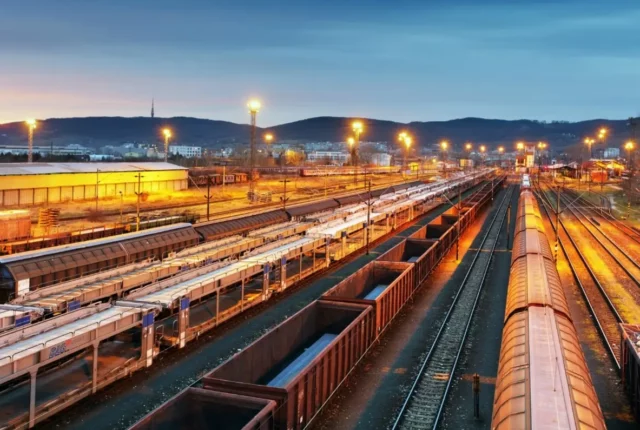
On the Right Track: Exploring the Advantages of Rail Freight
In today’s fast-paced world, efficient transportation of goods is the back
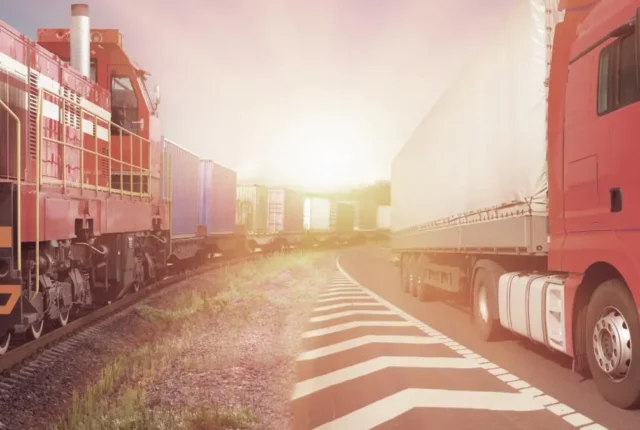
Rail vs Road: Best Freight Forwarding Options Explored
When it comes to moving goods, the choice between rail and road isn’t just
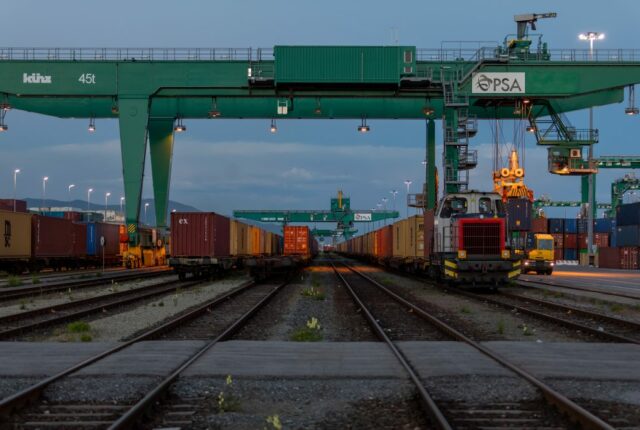
The Role of Rail Freight in Supporting Dutch Trade and Exports
The Netherlands, often called the gateway to Europe, is a nation built on trade.
