




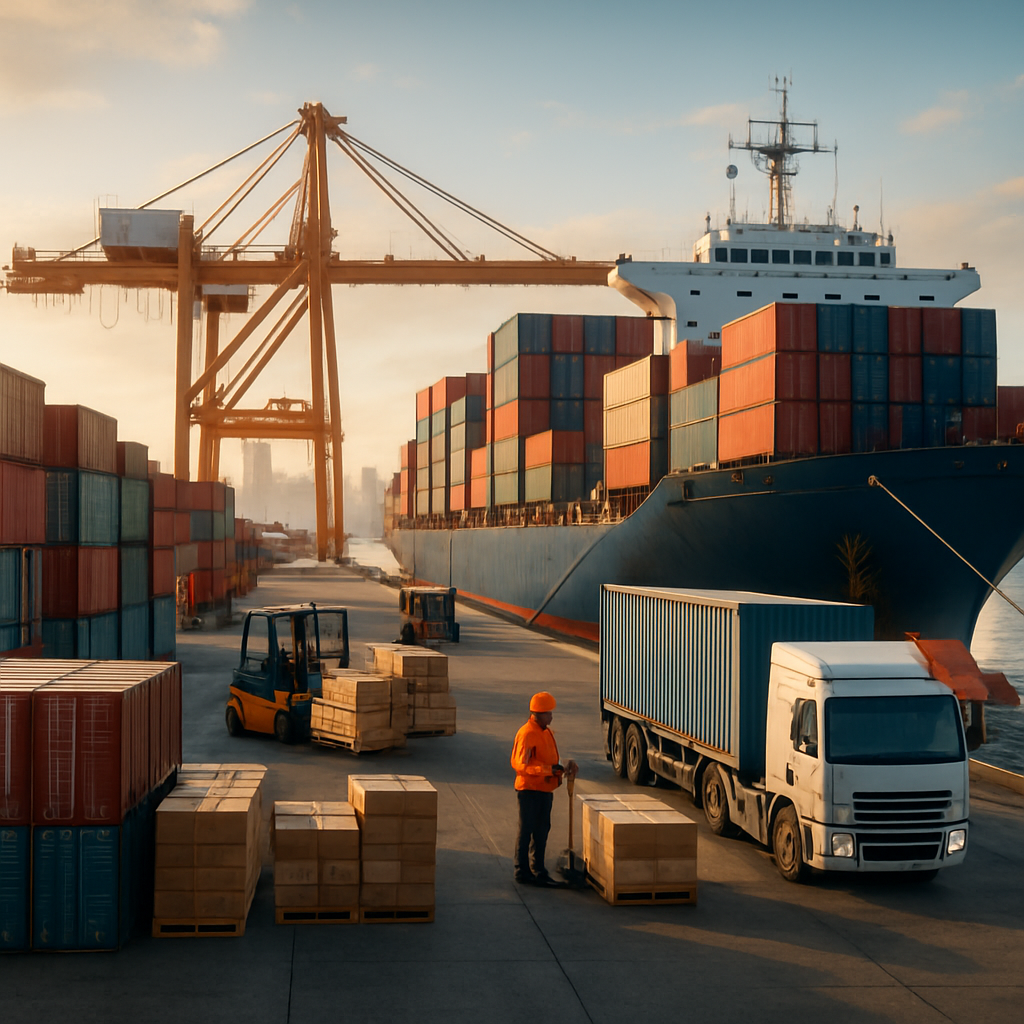
Coastwise Shipping Services: Benefits for Dutch Businesses
Coastwise Shipping Services: Benefits for Dutch Businesses
Understanding Domestic & Coastal in Netherlands
For Dutch companies under pressure to cut emissions and stabilize freight costs, coastwise shipping is emerging as a credible alternative to road-heavy distribution models. Domestic & Coastal in Netherlands describes the growing use of scheduled coastal vessels to move goods between national and nearby regional ports, supported by the country’s dense port network and North Sea access. Instead of relying solely on trucks, shippers can route containers and bulk cargo via coastal trades, then connect to inland depots by barge, rail, or truck. This approach keeps heavy flows away from congested motorways while maintaining access to Europe’s major logistics corridors.
Key Benefits and Use Cases for Dutch Shippers
For high-volume exporters of chemicals, metals, agri-food, and construction materials, domestic coastwise shipping services can reduce unit transport costs over medium distances. Coastal vessels allow shippers to combine flows from multiple origins, helping to smooth rate volatility and reduce dependency on driver availability. Companies using coastal freight solutions also report lower CO2 emissions per ton-kilometer, supporting Dutch and EU climate commitments. In practice, manufacturers along the North Sea and Wadden Sea coasts increasingly use short-sea coastal freight solutions to reach hub ports like Rotterdam and Amsterdam without sending every load by road.
Comparing Coastwise, Road, and Rail Options
Choosing between road, rail, and coastwise shipping hinges on distance, volume, and time sensitivity. Road remains the fastest for urgent deliveries and local delivery options, especially for temperature-controlled or high-value cargo. Rail often provides a middle ground for inland corridors with predictable flows but limited flexibility at the final mile. By contrast, coastwise shipping and local delivery work best when cargo volumes are large, lead times are predictable, and shippers are willing to use multimodal coastal delivery options that combine port calls with barge or truck distribution. For Dutch exporters serving nearby European markets, door-to-door coastal freight can provide a resilient alternative during road or rail disruptions.
- Use coastal freight service options to consolidate container and bulk flows between secondary Dutch ports and major hubs.
- Leverage the Netherlands coastal freight network to bypass motorway congestion and driver shortages.
- Align domestic coastal cargo delivery with sustainability targets by cutting truck kilometers and emissions.
- Integrate coastwise services with existing interstate shipping services and barge links for broader European reach.
- Monitor safety and environmental performance using public data from the European Maritime Safety Agency at https://emsa.europa.eu/.
When assessing potential partners, Dutch businesses should compare sailing frequency, port coverage, equipment suitability, digital visibility, and experience with customs and cabotage. Independent guidance on regulations and sustainable maritime logistics is available through the Dutch government’s official portal at https://www.government.nl/topics/transport-and-infrastructure, helping shippers understand compliance requirements before shifting volumes. A structured comparison of coastwise, rail, and truck solutions can clarify where coastal freight service options add value and where traditional modes remain essential. To explore which mix of services best fits your lanes and service levels, speak with a specialist in Domestic & Coastal in Netherlands offerings and request a tailored analysis of your current network and future growth plans.

Related posts

Digital Solution to Track Vessel Emissions
Due to the regulations on carbon emissions becoming increasingly more stringent,
How Logistics Companies Are Coping With Covid-19
When you say the word “Covid-19” in the logistics companies, most freight fo

The Vertom Patty: Hybrid-Electric Shortsea Vessel
There’s a new Hybrid-Electric Shortsea vessel on the market and her name is Ve
