




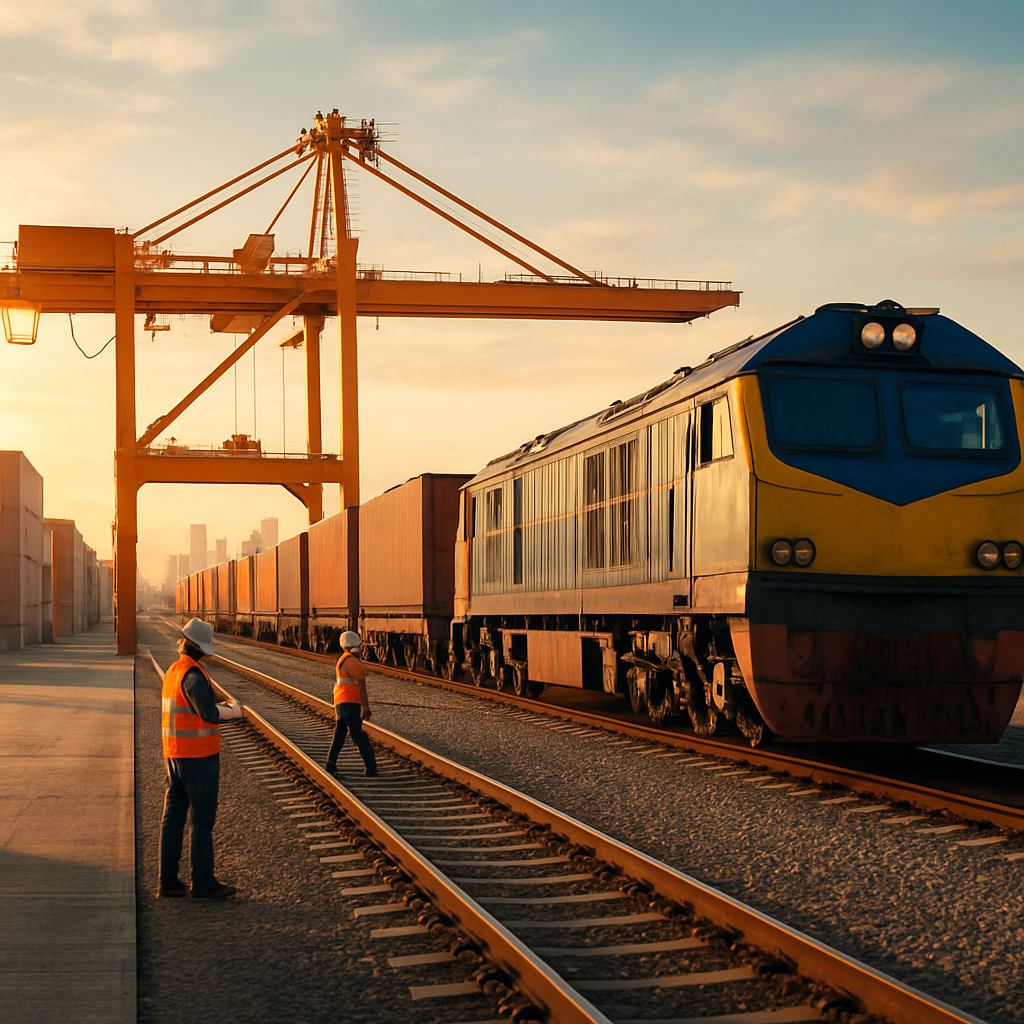
Cross-Border Rail Freight in Europe: Trends and Insights for 2026
Cross-Border Rail Freight in Europe: Trends and Insights for 2026
Cross-Border Rail Freight in Europe: Competitive Differentiation in 2026
Cross-Border Rail Freight in Europe: Trends and Insights for 2026 highlights how shifting market conditions are reshaping competitive differentiation rather than simply driving volume growth. With EU rail freight performance hovering around 375 billion tonne-kilometres and international flows declining, shippers now focus less on capacity alone and more on which providers can manage volatility, coordinate borders efficiently, and integrate rail into broader logistics and supply chain strategies across the continent.
In this environment, the providers that stand out are those able to convert network complexity into predictable, value-adding freight transportation solutions. Instead of offering generic services, leading operators design corridor-specific products, backed by precise performance metrics and proactive communication. Their goal is not only to move freight from A to B, but to offer cross-border freight logistics that reduce risk, stabilise transit times, and keep total landed costs transparent and controllable for the shipper.
For decision-makers, a key differentiator is how providers align rail with road, inland waterways, and terminals to support intermodal shipping services. The most capable partners move beyond basic slot booking and provide fully integrated rail-based intermodal shipping services, with synchronised schedules, standardised data formats, and clear escalation paths when disruptions occur. This level of orchestration is particularly critical where flows depend on time-sensitive sectors such as automotive, chemicals, and high-value intermodal containers.
- Depth of corridor expertise and access to core TEN-T routes
- Digital visibility and real-time tracking across multiple networks
- Consistent performance KPIs, including punctuality and border dwell times
- Flexible, transparent pricing that clarifies surcharges and peak periods
- Ability to pair rail freight transportation solutions with reliable last-mile road services
What Distinguishes Leading Cross-Border Rail Freight Providers
Although many services appear similar on paper, serious differences emerge when shippers compare process discipline, transparency, and technical integration. Top-tier operators are investing in ERTMS-enabled locomotives, digital timetable coordination, and predictive maintenance to minimise disruptions on high-density corridors. They also offer robust reporting, enabling customers to benchmark providers against independent references such as the European Commission’s transport statistics.
Using Rail Freight to Build a Resilient European Supply Chain
For companies operating complex european logistics and supply chain networks, the real advantage lies in how rail is used as a strategic platform, not an ad hoc alternative to road. A strong provider will help design a rail-connected supply chain strategy, mapping critical lanes, identifying where rail can reliably replace long-haul trucking, and planning contingency routings. This advisory role creates a clear distinction between commodity operators and long-term partners that actively support a more resilient and sustainable rail transportation options portfolio.
- Scenario planning for infrastructure works and seasonal border congestion
- Design of intermodal rail freight solutions tailored to industry-specific flows
- Support for accurate emissions reporting and modal shift targets
- Clear governance models and defined escalation processes
- Integration with door-to-door intermodal freight and terminal operations
Local expertise further sharpens competitive differentiation, especially where services hinge on strategic hubs. For example, shippers relying on Rail Freight in Netherlands expect their partners to combine strong terminal relationships with customs knowledge and reliable first- and last-mile road capacity. Understanding national frameworks and operational cultures across borders is often the deciding factor between promising service designs and consistently delivered performance in daily operations.
When assessing providers, logistics managers should request data-backed proposals, compare KPIs, and examine how each partner would respond to volume surges or network disruptions. Independent sources such as Eurostat’s transport statistics offer useful context for understanding capacity and modal share trends across modes (https://ec.europa.eu/eurostat). To move forward confidently, engage shortlisted partners in detailed scenario discussions, clarify expectations on visibility and communication, and select the provider whose approach best supports your cross-border freight strategy. If you are ready to evaluate options, request a structured consultation that compares routes, schedules, risk exposure, and long-term competitiveness for your European rail freight operations.

Related posts
The Growing Importance of Rail Freight in Dutch Supply Chains
The Netherlands has long been a leader in global logistics, known for its effici
Digital Tracks: The Impact of Technology on Rail Freight Efficiency
In the fast-paced realm of logistics, the convergence of technology and rail fre
Impact of E-Commerce Growth on Logistics Companies
The impact of e-commerce growth on Logistics companies in recent years has been
