





Freight Consolidation Strategies to Cut Costs in 2026
Freight consolidation strategies to cut costs in 2026 are rapidly becoming a core differentiator for shippers operating across the Netherlands and wider EU corridors. As fuel prices, road tolls, and driver shortages intensify, businesses are looking beyond basic rate negotiations and focusing on smarter network design, tighter planning disciplines, and collaborative carrier partnerships to protect margins while maintaining service quality.
Understanding Freight Consolidation in 2026
Unlike traditional transport planning that optimises each shipment in isolation, leading providers build end-to-end consolidation models that synchronise orders, modes, and nodes across the network. They combine domestic and cross-border flows, align despatch times with port and rail schedules, and apply Logistics efficiency strategies that are tailored to the specific density and seasonality of Dutch and European trade lanes. This integrated approach delivers measurable logistics cost and efficiency improvements rather than one-off savings.
What sets high-performing operators apart is their ability to consolidate without eroding customer service. They segment orders by priority, design alternative routing rules, and define clear thresholds for when to ship direct versus via hubs. In practice, that means urgent orders maintain fast, direct road options, while predictable volume is routed through multi-stop and multimodal solutions that maximise utilisation and reduce per‑unit transport cost.
- Consolidating LTL shipments into full truckloads using time-window alignment
- Designing milk-run routes that link multiple suppliers to shared consolidation hubs
- Combining road, rail, and inland waterways to reduce exposure to distance-based tolls
- Using cross-docks strategically to aggregate volume before long-haul movements
- Aligning consolidation rules with forecast-driven stock optimisation policies
Technology, Data, and Competitive Differentiation
The providers that stand out in 2026 are those using integrated transport, warehouse, and order management platforms to orchestrate consolidation from order capture onwards. They leverage data-driven demand forecasting and real-time demand and inventory visibility to anticipate which orders can be combined days in advance. This is where integrated logistics and inventory planning becomes a true competitive advantage, enabling more reliable service and fewer last-minute expedites.
Balancing Cost, Service, and Sustainability
Top-tier operators distinguish themselves by balancing consolidation savings with customer promises and environmental goals. They combine Supply Chain Optimization in Netherlands initiatives with modal shift programmes that move consolidated flows onto rail and barge wherever feasible. Resources from the European Environment Agency, such as their guidance on rail freight emissions at https://www.eea.europa.eu, help shippers quantify the CO2 impact of these changes and support sustainability reporting.
- Clearly defined service tiers that match consolidation rules to customer expectations
- Advanced inventory planning tactics that align safety stock with transport lead times
- Warehouse inventory optimisation tips to avoid congestion around consolidation cut-offs
- Inventory management techniques that stabilise order patterns and support fuller loads
- Demand forecasting methods tuned to the realities of logistics efficiency in the Netherlands
When evaluating providers, decision-makers should look for evidence of scenario-based planning, robust KPIs, and proven case studies across similar lanes and industries. The strongest partners will demonstrate how their consolidation models translate into lower total landed cost, higher delivery reliability, and clear environmental benefits. To understand how these capabilities could reshape your own network, request a tailored consolidation assessment and compare your current model against a fully optimised 2026-ready design.

Related posts
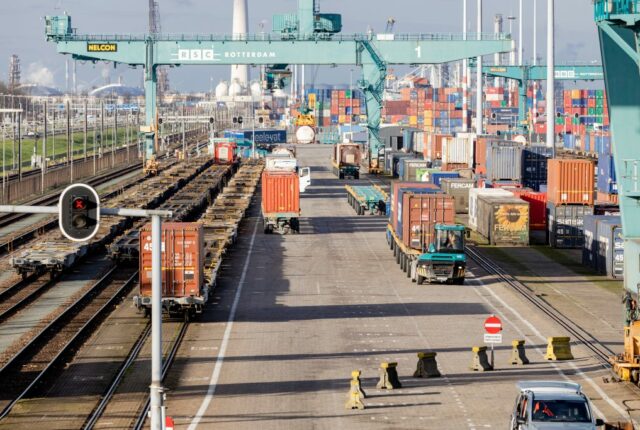
The Growing Importance of Rail Freight in Dutch Supply Chains
The Netherlands has long been a leader in global logistics, known for its effici
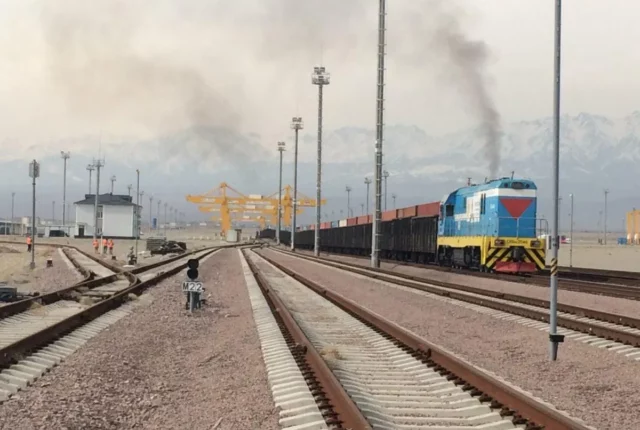
The Future of the New Silk Road: What It Means for Dutch Rail Freight in 2025
The Netherlands occupies a strategic position at the heart of Europe’s trade r

Demand Forecasting Best Practices for 2026 in the Netherlands
Discover demand forecasting best practices for 2026 in the Netherlands to boost
