




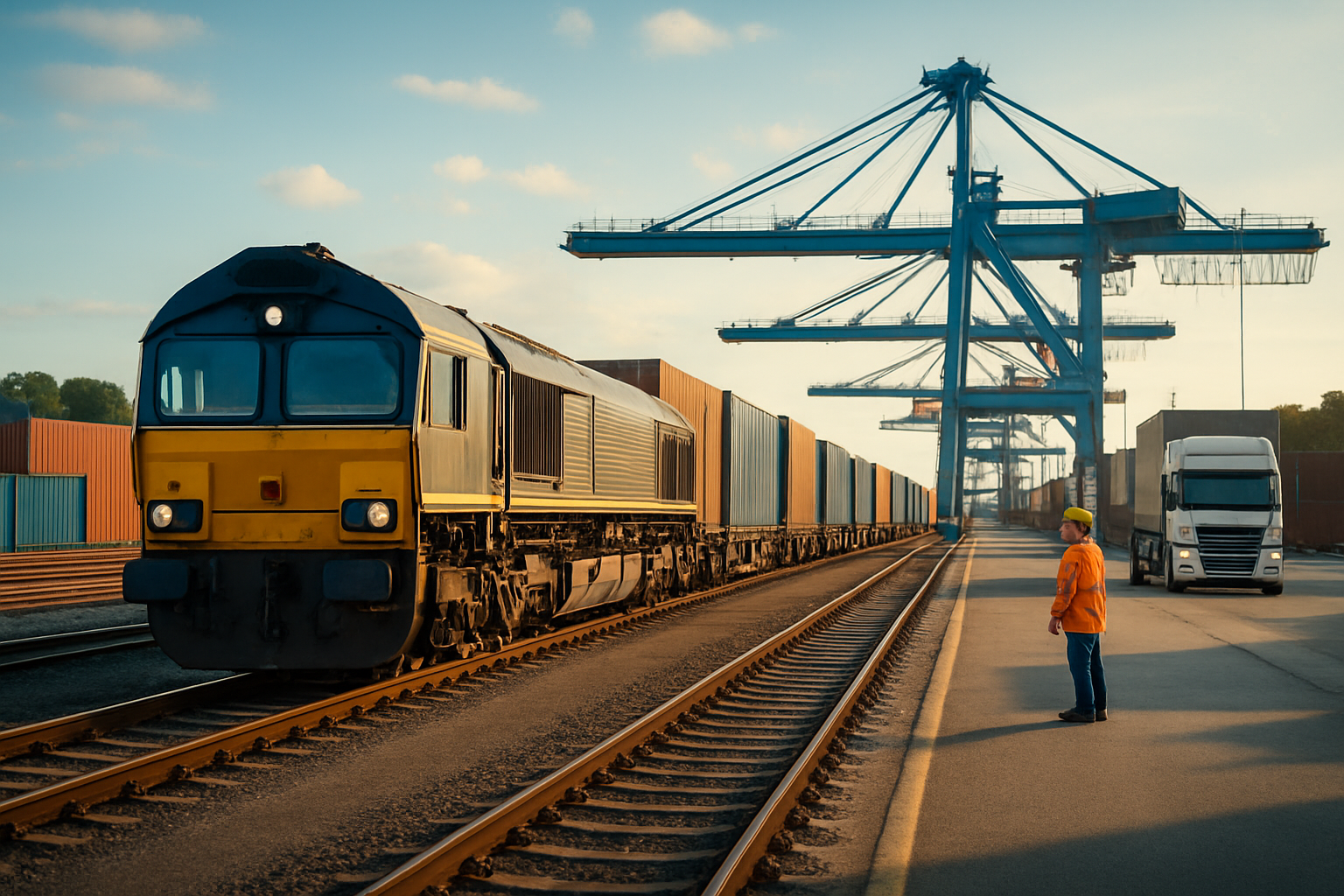
Navigating Rail Freight Customs Clearance in the Netherlands
Navigating customs can make or break the efficiency of Rail Freight in Netherlands, especially for shippers moving goods between the EU and third countries. Under the Union Customs Code, Dutch Customs relies on fully digital processes, so errors in declarations or late submissions can quickly translate into missed rail slots and storage charges. Understanding the main customs pathways and which operational model fits your business is critical to keeping rail-based freight transportation predictable and cost effective.
Navigating rail customs procedures in the Netherlands
Most Dutch rail terminals work with three core customs flows: imports into free circulation, exports, and transit under the New Computerised Transit System. Importers must provide accurate HS codes, customs value, and origin data through the DMS system, which shapes duty, VAT, and potential inspections. Export declarations must be lodged before departure, with timely exit evidence essential for zero-rated VAT. For hub operations linking ports, Germany, and beyond, transit procedures keep non-EU cargo moving without upfront duty payment, supporting complex cross-border logistics and supply chain strategies.
Choosing between in-house, broker, or integrated solutions
Shippers typically choose from three customs models: building internal expertise, outsourcing to a specialist broker, or using an operator that bundles transport with clearance. High-volume, repeatable flows can justify investment in customs software and integrated logistics and supply chain planning, particularly when paired with rail and road intermodal services. Businesses with seasonal or diverse commodities often prefer external brokers who already interface with DMS and NCTS. For companies seeking a single point of accountability, integrated freight transportation solutions that connect terminals, customs, and last-mile services can simplify decision-making.
Leveraging authorisations and trusted trader programs
To cut dwell time at rail terminals, many operators pursue Authorised Economic Operator status and related simplifications. Authorised Consignee or Consignor approvals, simplified declarations, and entry in the declarant’s records let goods clear at inland depots or company sites, supporting european intermodal shipping services and door-to-door freight transportation. These benefits come with obligations: strong internal controls, audit-ready records, and reliable IT connectivity. When applied correctly, they underpin end-to-end freight transportation management, reducing disruption across wider logistics and supply chain networks.
- Assess shipment profiles, commodity risk, and inspection history before deciding on a customs model.
- Confirm your providers’ experience with rail terminals, NCTS transit, and intermodal shipping services.
- Evaluate whether AEO or simplified procedures can support sustainable intermodal logistics solutions.
- Ensure your systems can exchange data reliably with Dutch DMS and NCTS platforms.
- Use official government guidance, such as Business.gov.nl, to benchmark compliance approaches.
Expert customs support can reduce delays, limit financial exposure, and stabilise train schedules across complex intermodal corridors. Advisors familiar with Dutch rail hubs, inspection patterns, and payment facilities can help you design Rail Freight in Netherlands strategies that align with operational goals. For a broader policy context and practical checklists, the European Commission’s customs pages provide regularly updated reference material at https://taxation-customs.ec.europa.eu/customs-4_en. To clarify which mix of in-house capabilities, brokers, and integrated providers best fits your network, consider booking a consultation with a rail-focused customs specialist and compare your current setup against alternative customs and transport configurations.

Related posts
How Rail Freight Forwarding Works for Dutch Businesses
Discover how rail freight in Netherlands supports Dutch businesses with cost-eff
Rail Freight Safety: Mitigating Risks in Railroad Transportation
In the world of transportation and logistics, rail freight plays a pivotal role.
Rail vs Road: Best Freight Forwarding Options Explored
When it comes to moving goods, the choice between rail and road isn’t just
