




How Rail Freight Forwarding Works for Dutch Businesses
How Rail Freight Forwarding Works for Dutch Businesses
Understanding Rail Freight in the Netherlands
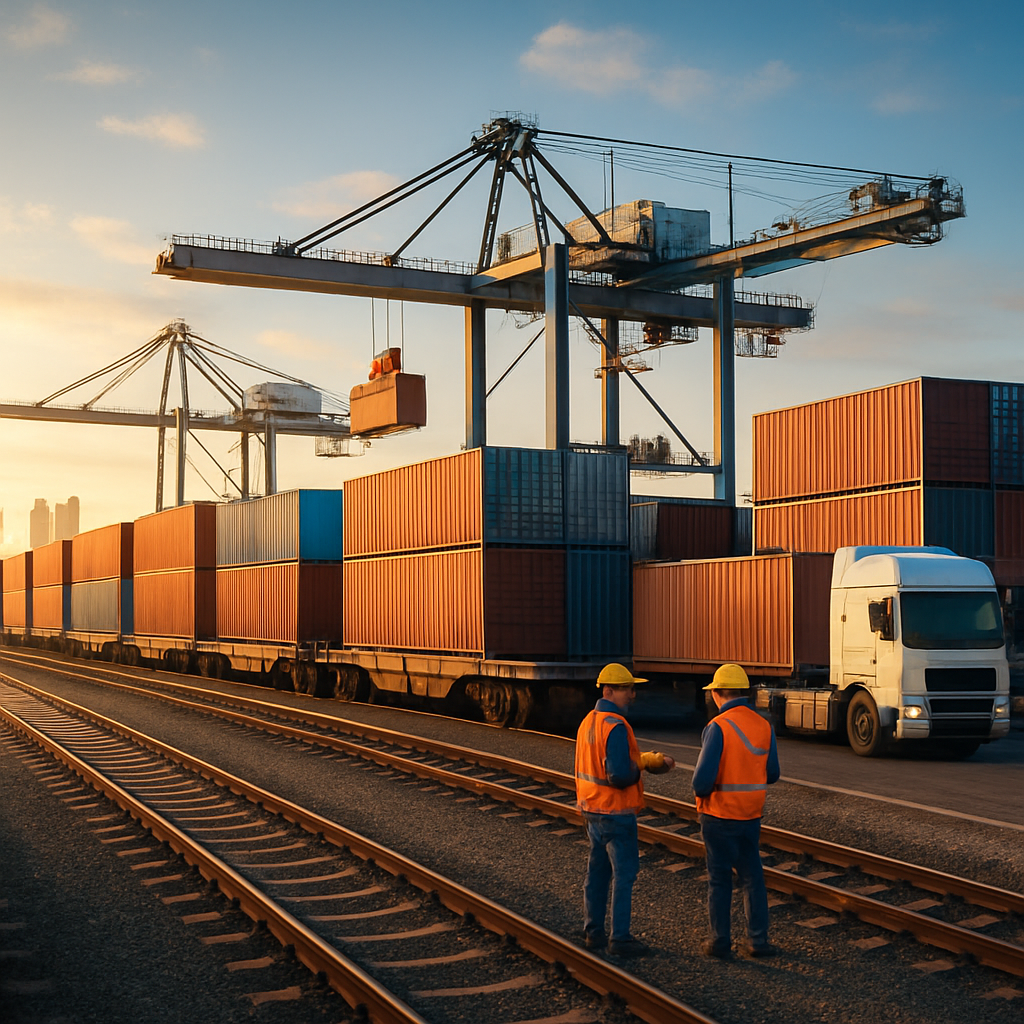
Rail freight forwarding has become a critical option for Dutch exporters and importers looking to move goods efficiently through Europe. Within the first stages of planning, businesses weigh how Rail Freight in Netherlands can connect their factories and warehouses with the Port of Rotterdam and inland terminals. For containerized cargo, bulk commodities, and higher-value shipments, rail offers a blend of speed, reliability, and predictable pricing that road-only options struggle to match. As congestion and driver shortages pressure trucking capacity, rail emerges as a stabilizing backbone for freight transportation solutions.
Key Infrastructure and Service Options
The Port of Rotterdam anchors many integrated rail freight solutions, linking deep-sea services to dedicated inland rail corridors across the Netherlands and into Germany, Belgium, Poland, and Italy. A core asset is the Betuweroute freight line, designed to separate cargo trains from busy passenger networks and improve punctuality. Through this corridor, shippers can leverage frequent departures and fixed transit schedules that suit long-haul flows within wider logistics and supply chain networks. For technical context on European rail corridors and interoperability, the European Union Agency for Railways provides detailed reference material at https://www.era.europa.eu/.
How Forwarders Design Rail-Based Solutions
Freight forwarders act as system integrators, combining rail with trucking and, where relevant, inland waterways into coherent end-to-end rail shipping services. They coordinate schedules between terminals, arrange last-mile transport, and manage documentation, customs, and insurance. Depending on volume and frequency, forwarders may propose block trains, wagon groups, or space in regular intermodal shipping services. This consultative role helps companies compare rail-focused logistics strategy options against pure road or barge, and determine which combination best fits their cost, risk, and service requirements.
When Rail Freight Forwarding Makes Sense
Rail is most competitive on medium to long-distance lanes, particularly those exceeding roughly 300 to 400 kilometers. Dutch manufacturers trading regularly with major German or Central European hubs often find that multimodal logistics and rail can reduce per-unit costs while stabilizing lead times. High-volume commodity flows such as chemicals, automotive components, foodstuffs, and consumer goods are well suited to door-to-door intermodal rail concepts that combine trains with pre- and on-carriage trucking. In parallel, sustainable freight transport by rail supports carbon-reduction targets and corporate ESG reporting without sacrificing operational performance.
- Compare rail and road intermodal links for your main export and import corridors.
- Assess terminal access, equipment availability, and cut-off times at Rotterdam and inland hubs.
- Model total landed cost, including handling, customs, and pre-/on-carriage trucking.
- Evaluate supply chain optimisation with rail scenarios for reliability and emissions reduction.
- Engage a specialist forwarder to test small pilot shipments before scaling up.
For Dutch businesses evaluating rail, the decision is rarely binary; it is about selecting the right mix of modes and partners for each trade lane. A competent forwarder can benchmark various rail and road combinations, highlight capacity risks, and recommend staged transitions that protect service levels. As more companies seek resilient, lower-carbon freight models, demand is rising for integrated rail freight solutions that can scale with growth. To explore how these options might apply to your own network, consider speaking with an expert who can map your flows, quantify potential savings, and outline practical next steps toward a more rail-enabled logistics model.

Related posts
The Future of International Rail Cargo Transport in 2026
Explore how international rail cargo transport in 2026 will reshape logistics st
Digital Tracks: The Impact of Technology on Rail Freight Efficiency
In the fast-paced realm of logistics, the convergence of technology and rail fre
Cargo on Rails: Maximizing Efficiency in Rail Freight Operations
In the dynamic world of logistics, efficiency is the cornerstone of success. Whe
