




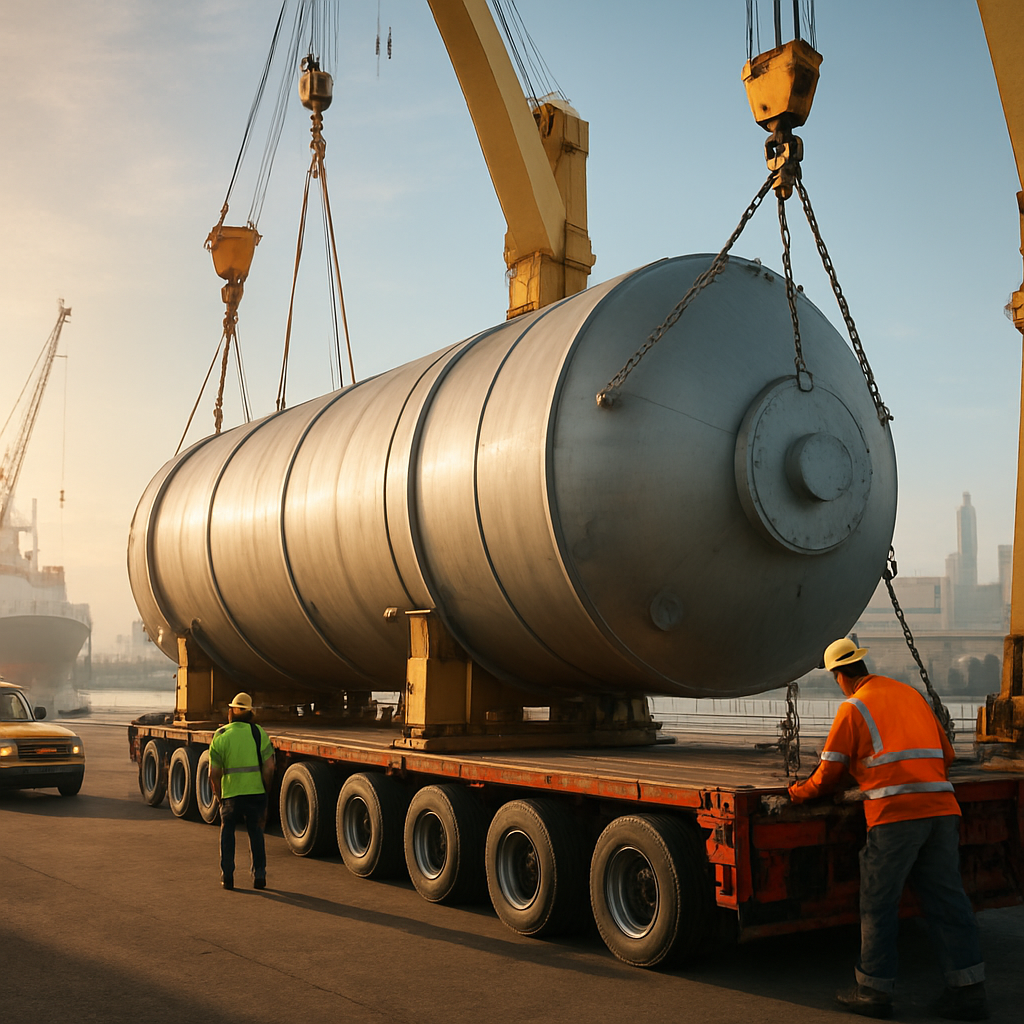
A Guide to Project Cargo Freight Forwarding in 2026
A Guide to Project Cargo Freight Forwarding in 2026 reveals how quickly risk is escalating for complex, oversized moves. Project owners are discovering that what once resembled traditional shipping now demands far more rigorous planning, specialised data, and on-the-ground insight. As components grow larger, supply chains become more fragile, and regulatory pressure mounts, outdated assumptions are turning into real cost and schedule threats.
A shifting risk landscape for project cargo freight forwarding in 2026
Project cargo freight forwarding in 2026 sits at the intersection of volatile fuel prices, emissions regulations, and tighter traceability rules. Oversized, high-value units must move through ports, roads, and waterways that were not designed for today’s dimensions or frequency. Traditional freight forwarding services can miss critical constraints such as axle load limits or lifting capacities that only surface late in the build phase. When that happens, delays hit precisely when labour, cranes, and penalty clauses are already locked in.
Hidden pitfalls in modern project logistics networks
Across Europe, and particularly in hubs such as the Netherlands, project moves must now navigate new tolls, zero-emission zones, and stricter urban access rules. Project Logistics in Netherlands highlight how quickly local regulations can alter routing, timing, and cost models. Teams that plan around a single port or mode often underestimate the value of alternative transportation solutions, especially when inland waterways or rail corridors face congestion or low water. These blind spots undermine even well-intended industrial project transportation planning.
Warning signs your project cargo strategy is out of date
Many organisations still coordinate multi-leg moves through email threads and spreadsheets, leaving no single source of truth for end-to-end freight coordination. Risk registers, if they exist, often overlook seasonal river levels, port congestion, or political disruptions along key corridors. Another common red flag is assuming container lines can safely manage most out-of-gauge pieces without tailored heavy lift transportation strategies. When budgets ignore market volatility, cost contingencies evaporate quickly once charters, storage, or permits change.
- Planning routes without updated data on bridge clearances and road restrictions
- Relying on generic rates instead of scenario-tested project cargo supply chains
- Treating logistics as a procurement exercise rather than design input
- Ignoring breakbulk logistics management constraints at smaller ports
- Assuming customs-compliant project shipping will be handled “as usual” at the border
Why late-stage freight planning is becoming more costly
When freight specialists are brought in only after engineering and contracting decisions, the room to adjust is minimal. Components may exceed local crane capacity, clash with urban curfews, or require bypasses that were never permitted. In a tightening market, margins for both carriers and project freight forwarding experts are shrinking, leaving little appetite to absorb surprises. External analysis from events such as Breakbulk Europe, available via the official conference site at https://www.breakbulk.com, underscores how environmental rules and infrastructure delays converge to squeeze oversized cargo transport solutions worldwide.
The need for more integrated, expert-led project cargo strategies
For many capital projects, the real vulnerability now sits at the junction of engineering design and supply chain management. Without early input on routing, lifting, and regulatory exposure, even robust transportation models can miss decisive constraints. Organisations benefit from partners who understand end-to-end risk, from origin factory gates to remote installation sites, and who can orchestrate end-to-end freight coordination with realistic contingencies. As end users face rising scrutiny on sustainability and resilience, overlooking these logistics realities can erode both budgets and reputations.
Decision-makers planning major industrial moves should pause to test whether their current approach truly reflects 2026 conditions. Reviewing your logistics risk profile, stress-testing routes, and engaging specialists in project cargo freight forwarding before contracts harden can prevent costly redesigns or penalties. Now is the time to assess your upcoming projects, identify where assumptions may be outdated, and speak with experienced advisors who can align your project cargo strategy with today’s operational, regulatory, and commercial realities.

Related posts

The Vertom Patty: Hybrid-Electric Shortsea Vessel
There’s a new Hybrid-Electric Shortsea vessel on the market and her name is Ve
Shore Power Solutions – Trident BMC Leading The Way
Leading the way in shore power solutions – Trident BMC, a provider of tu

Neo Orbis: Revolutionary Solid Form Hydrogen Propulsion Vessel
Known as the Neo Orbis, a revolutionary solid form hydrogen propulsion vessel th
