




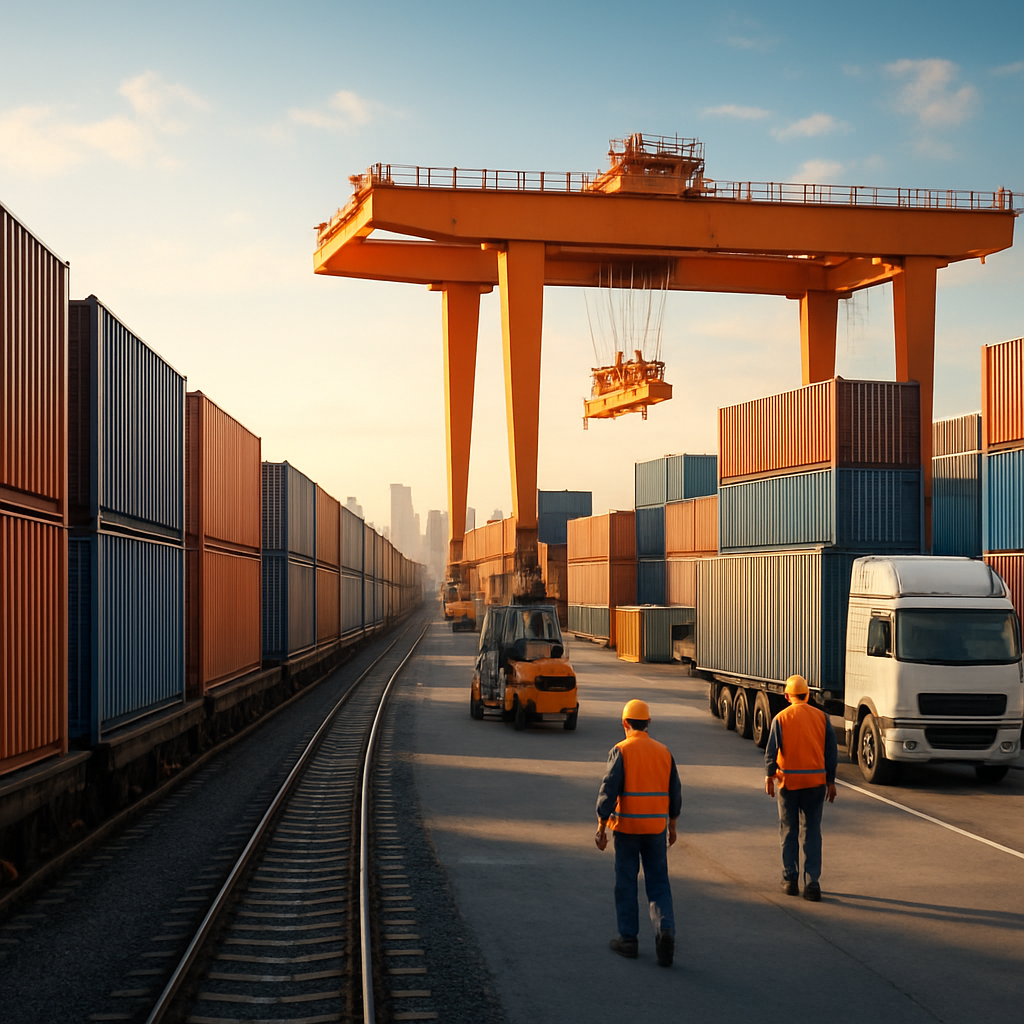
Door-to-Door Rail Freight Services: Streamlining Your Logistics
Door-to-door rail freight services are transforming how shippers manage complex logistics and supply chain networks across Europe. By combining rail with efficient first- and last-mile trucking, they deliver a continuous flow of goods from warehouse to customer. For companies weighing road, sea, and Rail Freight in Netherlands, these integrated services can unlock major gains in reliability, cost control, and sustainability while keeping delivery times competitive.
1. Faster, More Reliable Long-Distance Transport
Door-to-door rail freight services keep cargo moving at consistent speeds, bypassing highway congestion and driver shortages that disrupt trucks. Scheduled departures and fixed rail paths help protect lead times on key European corridors. For manufacturers running just-in-time operations, this stability reduces the risk of stockouts, production stoppages, and costly emergency loads. As part of broader freight transportation solutions, rail-based linehaul brings discipline and predictability to long-distance moves.
2. Lower End-to-End Costs for Larger Volumes
When volumes are medium to high, rail can deliver a lower cost per tonne than all-road transport. Fixed rail tariffs, combined with tightly planned truck drayage at each end, help smooth out fuel price volatility and driver rate spikes. Shippers moving containers, automotive parts, machinery, or construction materials often find rail freight transportation solutions particularly compelling. Over a full year, even modest savings per load can translate into substantial budget relief.
3. Meaningful Carbon Footprint Reduction
Sustainability is now central to board-level decision-making, and transport is one of the biggest emission sources. The International Energy Agency notes that rail accounts for a small share of transport emissions relative to its freight task, highlighting its efficiency (The Future of Rail – IEA). Shifting suitable flows to sustainable rail freight solutions helps companies progress toward ESG commitments and meet customer expectations without sacrificing service quality.
4. Stronger Supply Chain Resilience
Door-to-door rail freight services sit at the heart of modern intermodal shipping services, blending rail with trucking and, where relevant, inland waterways. This multimodal approach spreads operational risk: if roads suffer from strikes, weather events, or border delays, contracted rail capacity can keep key lanes open. For cross-border rail shipping solutions, having a structured plan B within the same network reduces disruption and protects customer service levels.
5. Expanded Coverage via Intermodal Hubs
Europe’s dense network of inland terminals, dry ports, and logistics hubs allows intermodal rail freight transportation to reach far beyond mainline tracks. Cargo transfers efficiently between trains and trucks, extending service into industrial zones and urban distribution centres. Businesses running rail-focused logistics and supply chain models use these hubs to mirror hub-and-spoke operations found in other regions, improving reach without sacrificing efficiency.
6. Improved Cargo Security and Compliance
Rail terminals typically feature controlled access, CCTV, and standardised handling procedures, reducing theft and damage risk. Containers are sealed, with clear documentation at each handover, supporting customs and regulatory compliance. For high-value or sensitive products, rail logistics and supply chain management strategies that minimise handling points can materially cut loss exposure. This assurance is critical for sectors like electronics, pharmaceuticals, and luxury goods.
7. Expert Support Simplifies Mode Shift Decisions
Many shippers hesitate to adopt door-to-door intermodal shipping services due to perceived complexity around timetables, equipment, and terminal operations. Specialist providers design integrated rail intermodal services, handle bookings, and coordinate with truckers, making the transition far smoother. If you are evaluating how intermodal rail freight transportation could fit your network, expert advice can identify the lanes, volumes, and service profiles where rail delivers the strongest return.
- Clarify which corridors suit door-to-door rail based on transit time and cost.
- Benchmark emissions benefits against current road-heavy operations.
- Assess how rail can support long-term rail logistics and supply chain management goals.
- Explore how door-to-door rail can complement existing road fleets, not replace them overnight.
- Identify partners experienced in cross-border rail shipping solutions for complex European routes.
If you are ready to test how door-to-door rail can streamline your network, now is the time to act. Speak with a specialist about tailored freight transportation solutions, request a lane-by-lane feasibility study, and secure space on core routes before capacity tightens. A focused consultation can quickly reveal whether door-to-door rail freight services will improve reliability, cut emissions, and drive costs down across your logistics and supply chain.

Related posts
Digital Tracks: The Impact of Technology on Rail Freight Efficiency
In the fast-paced realm of logistics, the convergence of technology and rail fre
Understanding Rail Freight Services in the Netherlands: A Guide
Explore how Rail Freight in Netherlands supports efficient, lower-emission Europ
Cross-Border Rail Freight in Europe: Trends and Insights for 2026
Explore cross-border rail freight in Europe for 2026, key trends, provider diffe
