




Bonded Warehousing Solutions: A Guide for Dutch Importers
Bonded Warehousing Solutions: A Guide for Dutch Importers
In a volatile trade and interest rate environment, Dutch companies that treat customs as a strategic discipline rather than an administrative burden are the ones that will protect margin, preserve cash, and stay agile across the EU single market.
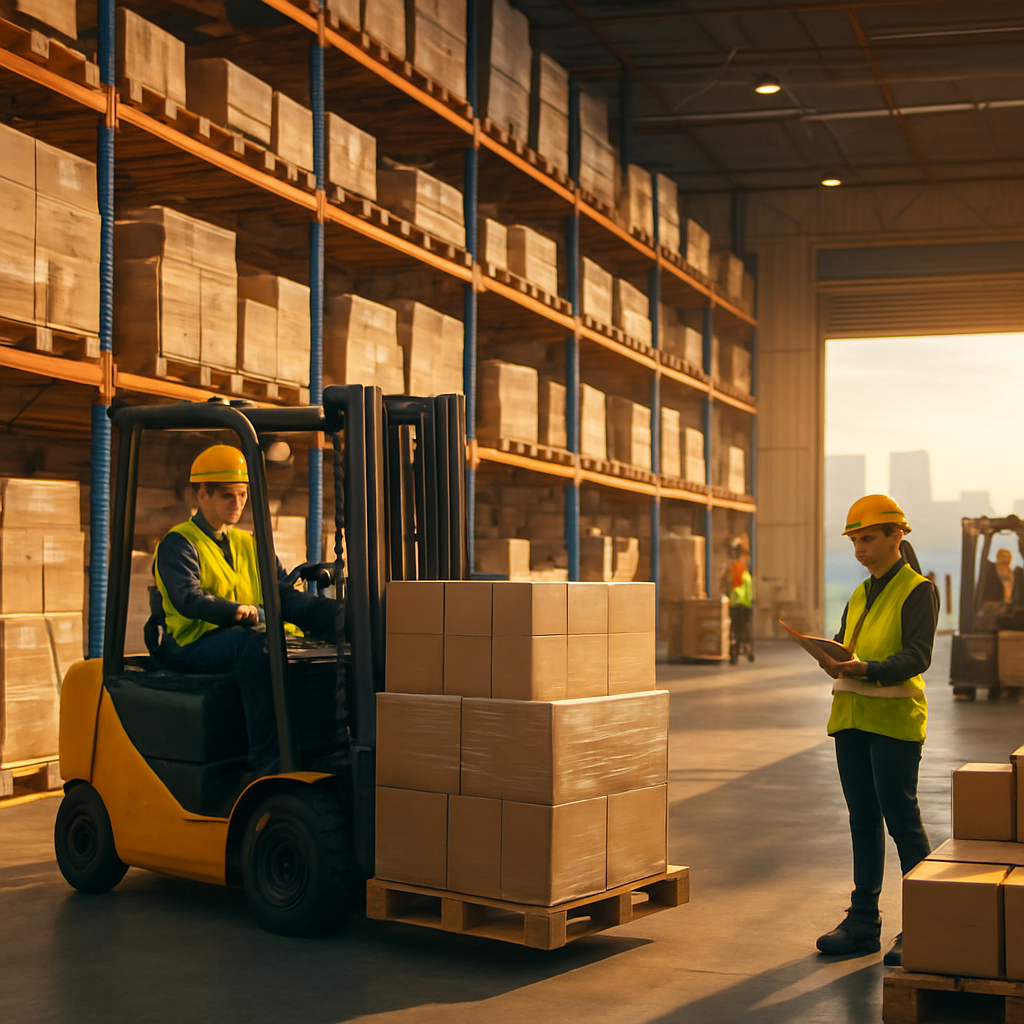
Dutch importers sit at the centre of European trade flows, particularly around Rotterdam and Schiphol, where bonded warehousing solutions are increasingly used as a strategic lever rather than a back‑office obligation. Under the Union Customs Code, these facilities allow non‑EU goods to be stored without immediate duty or import VAT, which is critical when working capital is tight and demand is unpredictable across multiple markets.
Bonded warehousing solutions as a strategic cash‑flow and market entry tool
Today, the most sophisticated importers view bonded warehousing solutions as integral to financial and commercial planning. By deferring duties until goods are released, finance teams can align tax outflows with confirmed revenue, supporting supply chain efficiency and more disciplined risk management. At the same time, holding stock under bond enables test‑and‑learn launches into new EU markets, using the Netherlands as a low‑friction hub for trial volumes, seasonal ranges, or high‑value SKUs.
Designing bonded setups for operational advantage, not just tax deferral
Operationally, the real value emerges when bonded facilities are embedded into broader logistics and warehousing management, rather than run as isolated compliance zones. Importers that integrate customs systems with warehouse management platforms gain real‑time visibility over bonded and free‑circulation stock, improving efficient warehouse inventory control and decision‑making. This integration also supports advanced inventory storage strategies, such as segmenting slow‑ and fast‑moving items or separating EU‑bound stock from consignments earmarked for re‑export to global destinations.
From a network design perspective, many Dutch importers are reassessing inventory storage options and warehouse logistics optimization in light of geopolitical risk, freight disruption, and stricter ESG expectations. Locating secure bonded inventory storage close to ports and airports reduces lead times while limiting unnecessary inland movements. For some businesses, combining bonded and non‑bonded capacity in a single campus, supported by 3pl logistics management services, delivers the flexibility to pivot between markets without major reconfiguration.
Regulatory expectations are also tightening. Dutch Customs increasingly relies on data‑driven oversight, aligning with European Commission guidance that prioritises electronic records and robust audit trails. Importers that invest in mature logistics management solutions, aligned processes, and disciplined governance are better placed to demonstrate control, avoid penalties, and support netherlands supply chain solutions that scale with growth. Authoritative references such as the European Commission’s Union Customs Code guidance at https://taxation-customs.ec.europa.eu/customs-4/union-customs-code-eu-customs-actions_en provide valuable context on emerging supervisory trends and digital requirements.
Looking ahead, the most competitive Dutch importers will treat the Netherlands not only as a gateway but as a strategic decision node for optimizing supply chain operations across the EU. That means reviewing Warehousing in Netherlands annually, stress‑testing customs and duty assumptions, and modelling alternative bonded scenarios under different demand, tariff, and interest‑rate conditions. To translate these insights into action, importers should convene finance, tax, and operations leaders with a customs‑savvy logistics partner to redesign bonded flows and unlock new value.

Related posts
Short-Term vs Long-Term Storage: Which is Right for You?
Compare short-term vs long-term storage solutions, understand costs and flexibil
Warehouse Management in 2026: How AI and Real-Time Data Are Transforming Dutch Warehouse Logistics
In 2026, warehouse management is no longer just operational necessities; it&
Urban Warehousing in the Netherlands: Solving the Last-Mile Delivery Challenge
Urban warehousing has become a critical component in addressing the challenges o
