




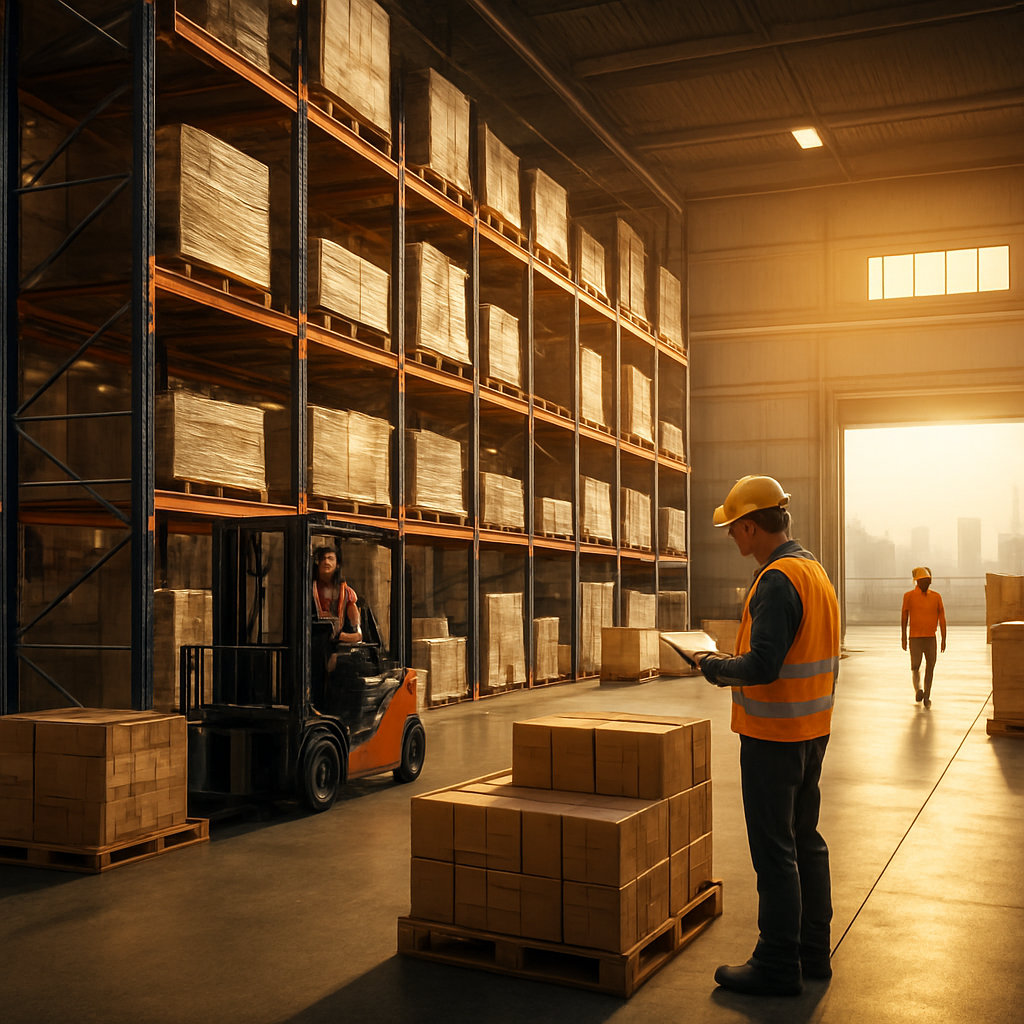
Distribution and Storage Solutions for Growing Dutch Businesses
Growing Dutch businesses are facing a perfect storm of rising warehouse rents, tight real estate supply, and mounting customer expectations. To stay competitive, ambitious teams are rethinking their distribution and storage models with a sharper focus on cost control, resilience, and speed. This listicle explores seven practical ways to strengthen Warehousing in Netherlands while laying the groundwork for long-term growth and lead generation.
1. Strategic Multi-Location Warehousing
Building a hub-and-spoke network across key logistics corridors such as Rotterdam, Venlo, and the German border helps cut transit times and last-mile costs. By placing stock closer to customers, Dutch firms can move from multi-day to next-day or even same-day delivery. This approach supports dutch supply chain optimization, reduces risk from local disruptions, and provides a platform for cross-border growth into Belgium and Germany.
2. Flexible Capacity and Scalable Storage Solutions
Locking into long-term leases can be risky in a market with low vacancy and shifting demand. Instead, growing brands are choosing scalable storage solutions such as shared warehouses, seasonal overflow space, and on-demand pallet storage. These inventory storage options make it easier to manage promotions, product launches, and e-commerce peaks without paying year-round for unused capacity or compromising service levels.
3. Integrated Fulfilment and Value-Added Services
Modern facilities function as fulfilment engines rather than static storage. Providers that combine picking, packing, labelling, kitting, and returns processing deliver integrated logistics strategies that streamline operations. This model is especially valuable for ecommerce fulfillment logistics, where consistent service, fast turnaround, and branded packaging directly influence customer satisfaction and repeat orders across the Benelux region.
4. Technology, Data, and Real-Time Stock Visibility
Investing in a modern warehouse management system gives operations leaders real-time stock visibility across multiple sites. Barcode scanning, RFID, and dashboards help tighten warehouse inventory planning, reduce safety stock, and prevent costly stockouts. This level of data-driven control improves logistics management solutions, supports accurate delivery promises, and provides the reporting needed for board-level decision making.
5. Sustainable and Cost-Efficient Distribution
Sustainability expectations are rising, driven by EU regulations and conscious customers. Energy-efficient buildings, solar-ready roofs, LED lighting, and route optimisation tools can lower emissions and operating costs simultaneously. Resources such as the European Commission’s transport and environment reports at https://transport.ec.europa.eu transport.ec.europa.eu provide useful benchmarks for aligning distribution network efficiency with climate targets and brand reputation.
- Consolidate shipments to reduce partial loads and fuel spend.
- Use load planning software to enhance supply chain efficiency.
- Deploy reusable packaging where product and channel allow.
- Monitor energy performance across all facilities routinely.
- Engage partners committed to measurable sustainability targets.
For many firms, outsourced warehouse operations provide faster access to prime locations and skilled labour than building from scratch. The right 3PL can bundle storage, fulfilment, and transport, while also advising on distribution network design and risk management. If your business is scaling in the Netherlands or across Europe, speak with our specialists to review your current model, compare advanced Warehousing in Netherlands solutions, and request a tailored proposal that supports your growth and customer experience goals.

Related posts
Why SAP Warehouse Solutions Are Becoming Essential for European Warehouse Logistic
If you run a European distribution operation, you already feel the pressure: tig

Bonded Warehousing Solutions: A Guide for Dutch Importers
Bonded warehousing solutions in the Netherlands help importers optimize cash flo
Inventory Management Services: Optimizing Your Supply Chain
Build a more reliable, efficient supply chain with transparent inventory managem
